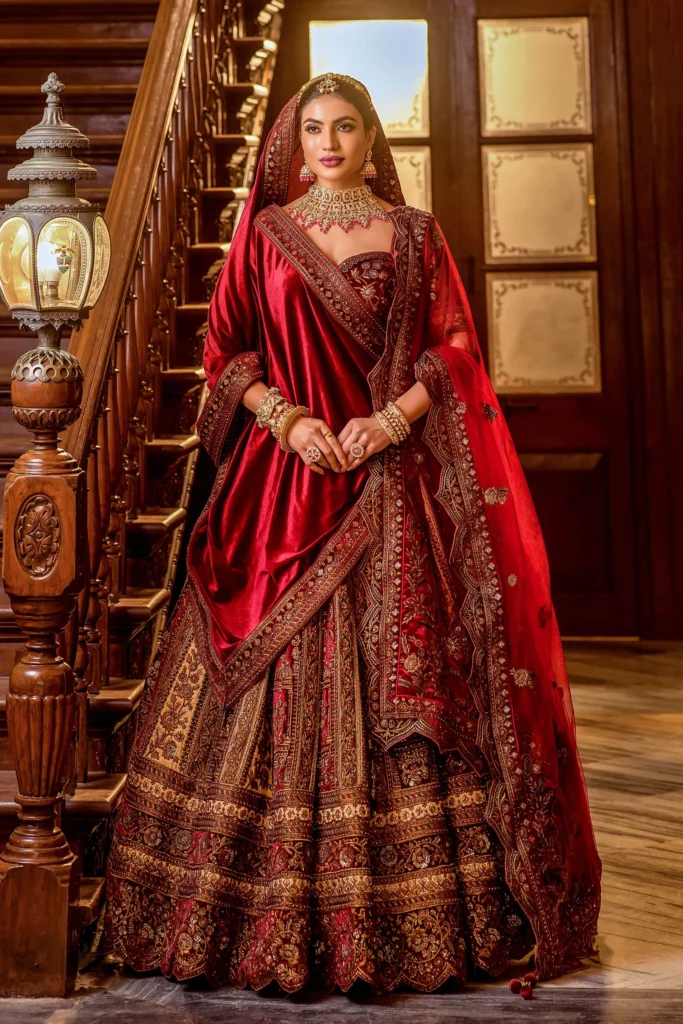
A PDF detailing lehenga (a long, embroidered skirt) cutting and stitching can be a valuable resource for those looking to create their own lehenga. It typically includes instructions for taking measurements, drafting patterns, cutting fabric, and assembling the different parts of the lehenga, including the skirt, blouse, and dupatta (scarf).
- Taking Measurements:
The PDF will guide you on how to accurately measure your waist, hips, desired skirt length, and desired flare (fullness) of the lehenga.
- Pattern Drafting:
Instructions on how to translate these measurements into a paper pattern. This might involve using a grid or graph paper and specific formulas to create the different panels of the lehenga, such as the kalis (panels) for a kali lehenga or the A-line shape.
- Transferring the Pattern: The drafted pattern pieces are transferred onto the fabric.
- Cutting: The fabric is cut according to the pattern pieces, ensuring accurate alignment of grainlines and fabric designs.
- Joining Panels: The PDF will guide you on how to sew the different panels together to form the skirt.
- Adding the Lining and Interfacing: Instructions on how to attach lining fabric for comfort and stability, and potentially interfacing to add structure to the waistband.
- Finishing the Hem: Guidance on how to create a neat and durable hem for the lehenga skirt.
- Adding Closure: Instructions on how to attach a zipper or other closure mechanism.
- Adding a Belt or Waistband: Details on how to create and attach a waistband or belt to the lehenga.
- Blouse Pattern and Stitching:The PDF may also include instructions for creating the blouse, including pattern drafting, cutting, and stitching the various pieces (front, back, sleeves).
- Dupatta Finishing:
Instructions on how to finish the edges of the dupatta, such as adding a border or embellishments.
- Fabric Selection:
The PDF may offer guidance on choosing appropriate fabrics for lehenga, considering factors like drape, weight, and embellishments.
- Finishing Techniques:
Tips on adding embellishments, such as embroidery, beads, or sequins, to enhance the look of the lehenga.
- Troubleshooting:
Potential issues and how to address them during the cutting and stitching process.
You can find lehenga cutting and stitching tutorials and PDFs on platforms like YouTube, Pinterest, and websites dedicated to sewing and fashion. Many of these resources are available for free and offer step-by-step instructions with visuals to guide you through the process.