What Makes Indian Fashion Sketches Unique
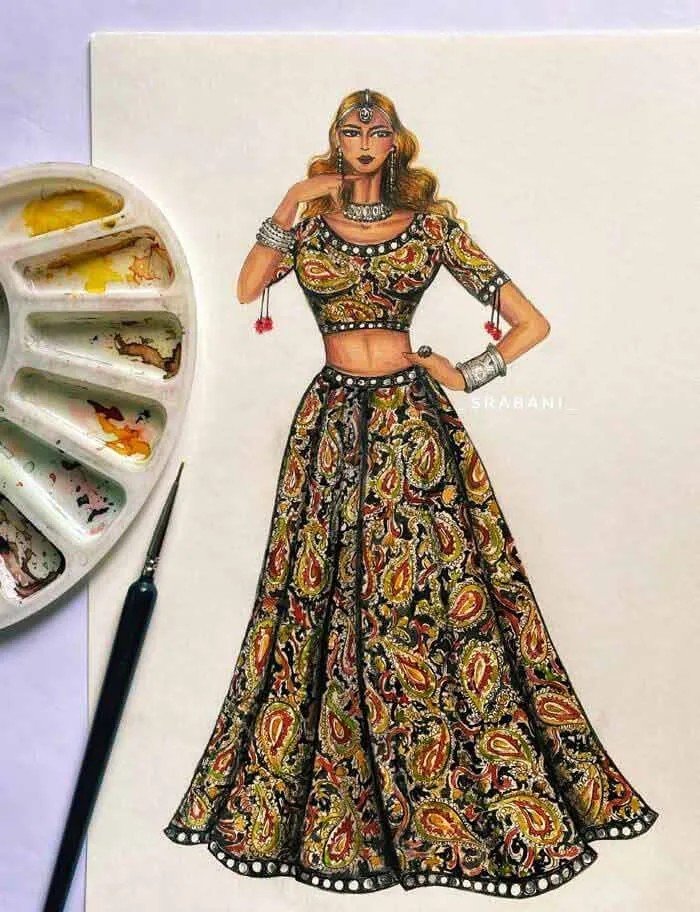
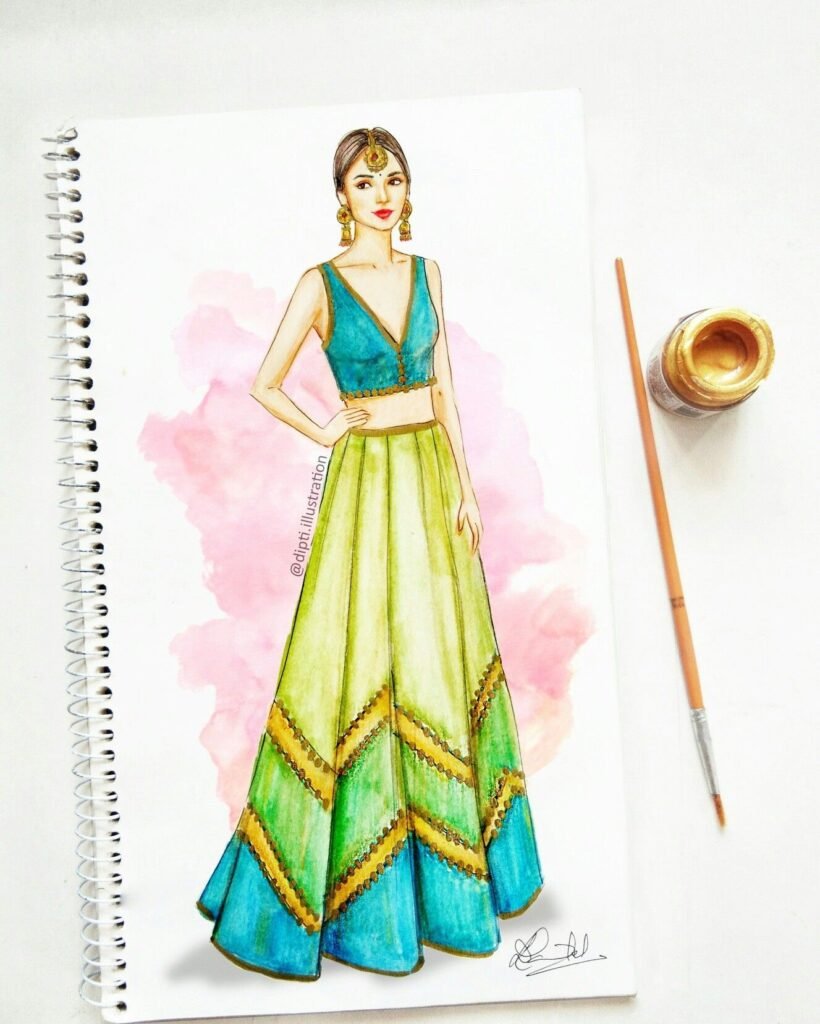
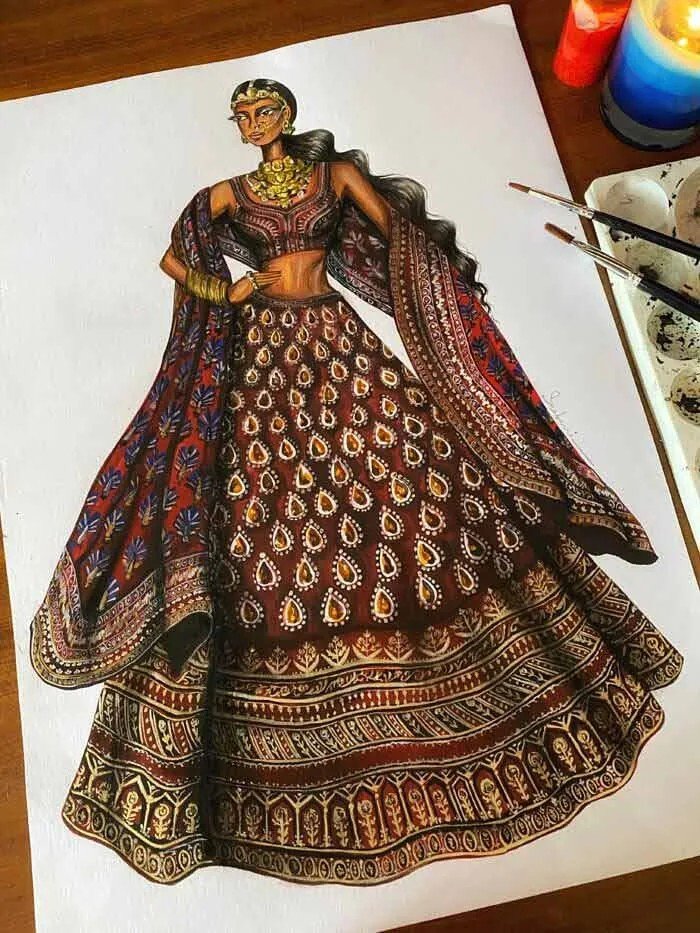
Rich cultural storytelling: Illustrations often incorporate heritage crafts like Banarasi, Kalamkari, mirrorwork, and intricate embroidery .
Mixed-media artistry: Traditional watercolors, markers, wood-free pencils, and layered textures are popular—Sriabani from Guwahati prefers these to depict Indian textiles.
Gesture-focused croquis: Many designers use elongated figures in dynamic poses to showcase drape, movement, and silhouette, especially for bridal and festive wear.
Sketching Content & Techniques
Raw sketching: Start with a croquis (elongated figure, 9‑head tall) to capture pose and posture. Popular among many designers.
Overlay design: Draft garment features—necklines, panels, pleats, and embroidery—on top of the croquis.
Textural shading: Apply watercolor washes or markers to suggest fabrics like silk, chiffon, or brocade.
Intricate detailing: Highlight Indian-specific patterns—paisleys, florals, mirror work—with fine inks or colored pencils.
Annotation & color notes: Label the fabrics, trims, stitch techniques, suggesting materials and construction.
Notable Indian Fashion Illustrators
Srabani (Assam): Tutor and illustrator who shares step-by-step tutorials for bridal wear, Banarasi and Kalamkari lehengas.
Malvika Raj: Noted for blending Madhubani painting and social themes into wearable art—her sketches often feature rich folk motifs.
Suneet Varma, Tarun Tahiliani, Neeta Lulla, Paromita Banerjee: Prominent designers who integrate croquis with heritage elements such as Paithani weaving, couture detailing, and handloom draping .
Designer Spotlight: Srabani’s Sketch Style
“I like developing fabric textures, prints and embellishments through layering of colours using mixed media.”
– Srabani on creating Indian bridal fashion illustrations.Her work is an excellent study for combining freehand drawing with cultural richness and materiality.
Tips & Resources for Beginners
Use croquis templates: You can find free printable fashion figure templates to start your sketches.
Study Indian embroidery styles: Look into ethnic crafts like Paithani, Kalamkari, chikankari to incorporate authentic textures.
Practice mixed media: Blend markers, colored pencils, watercolor for realistic drape and shimmer on Indian garments.
Watch tutorials: Channels like “Art Studio by Srabani” offer step‑by‑step guides for lehenga and bridal costume illustrations.
Would you like downloadable croquis templates, tutorials on a specific style (e.g., lehenga or sari), or feedback on your own sketches? I’m happy to help!