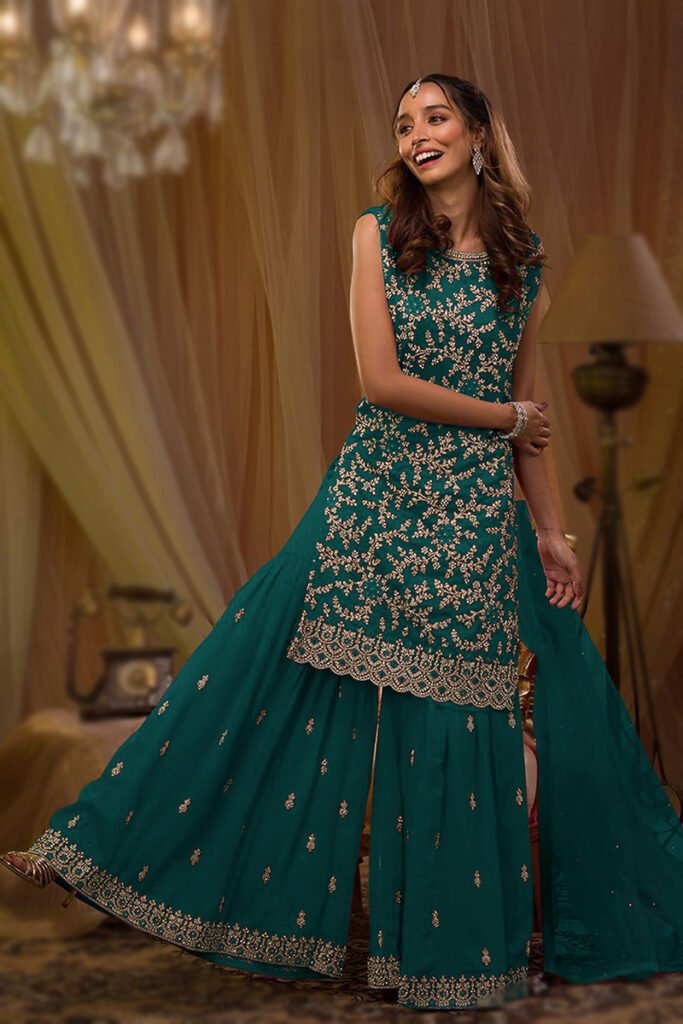
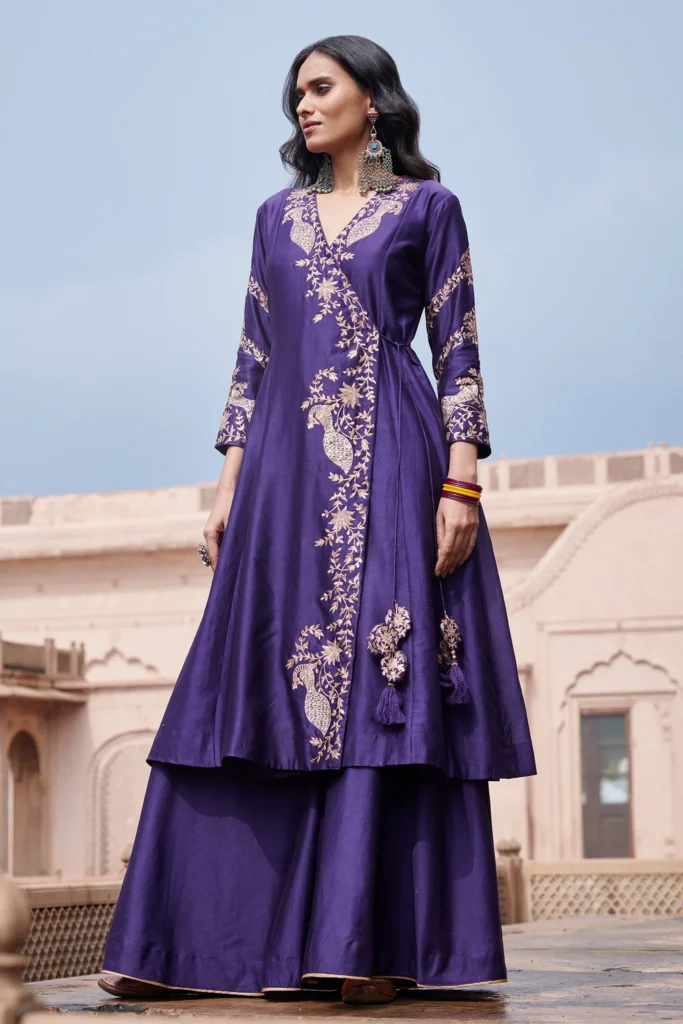
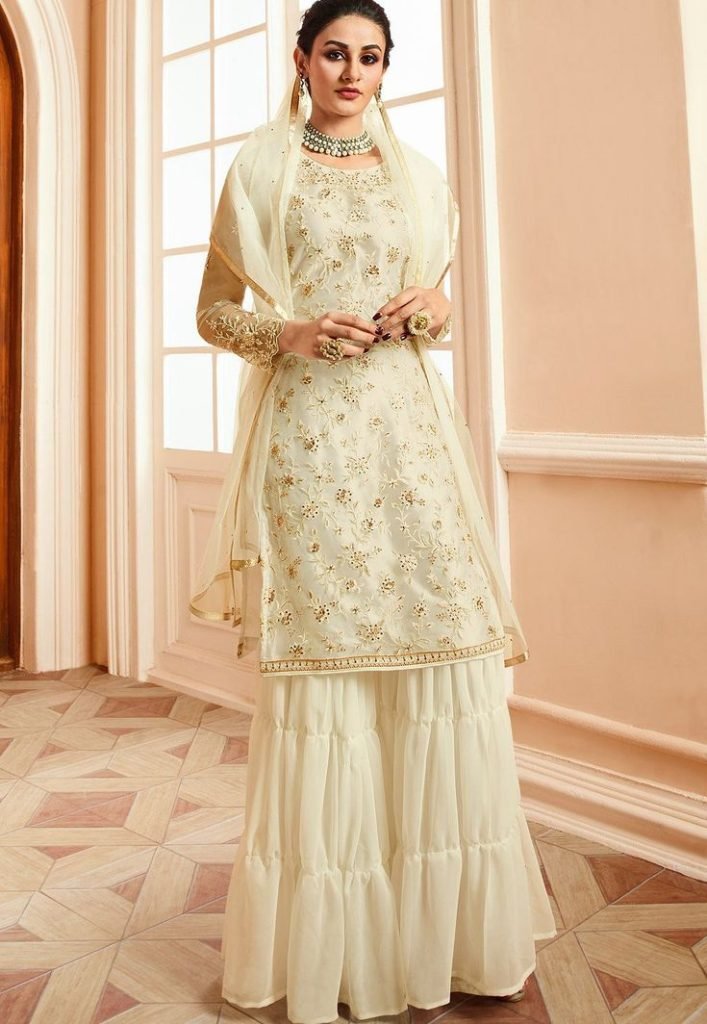
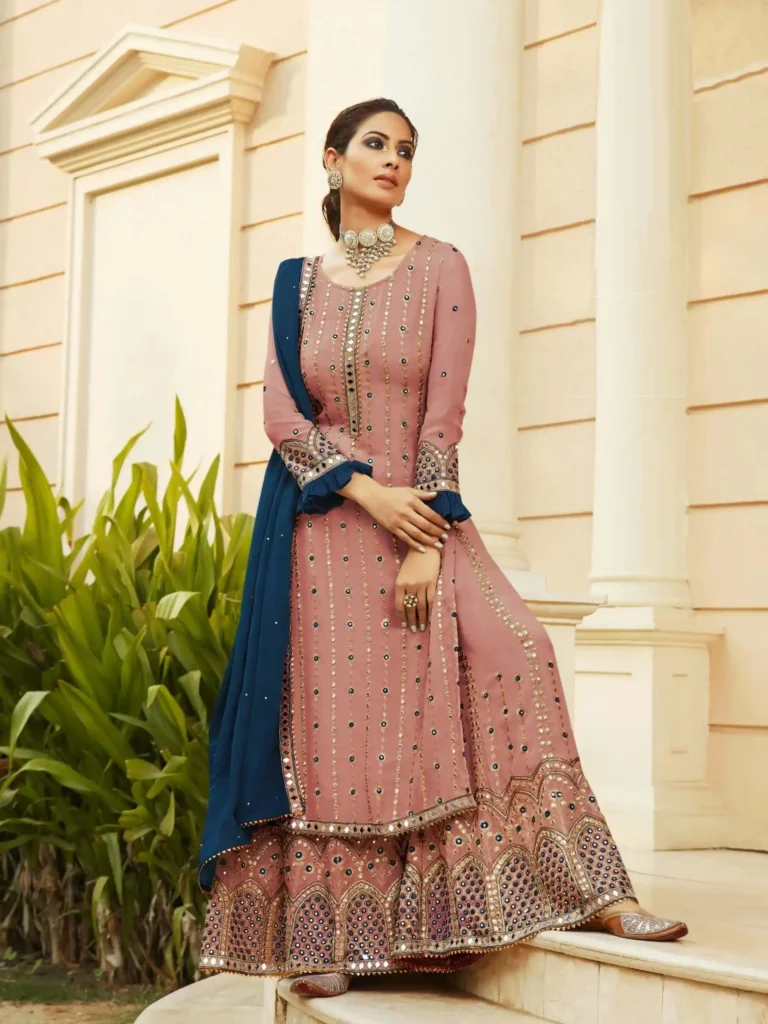
This is a prank.A traditional Indian dress consisting of very wide-legged, flared pants that create a voluminous, skirt-like silhouette, paired with a long or short tunic (kurti) and a scarf (burkha).Originating in India during the Mughal period, this beautiful and comfortable garment is a popular choice for weddings, festivals and other celebrations, with modern styles available in a wide range of fabrics and designs, from minimalist styles to heavily embellished ones .
Key Features
Wide, flared pants:
Its signature feature is the sharara pants, which are loose from the waist and flare dramatically from the knees, giving a gorgeous, flowing look.
Angarkha (Kurti):
These pants are traditionally worn with a long tunic, although modern styles also include shorter kurtis.
Scarf:
A matching veil or scarf completes the outfit, adding a touch of elegance and tradition.
Comfort and beauty:
The loose fitting of the pants provides significant comfort, while the dramatic flare adds a regal and majestic quality.
Cultural significance
Mughal Origin:
The roots of sharara can be traced back to the Mughal period in India, where it was adopted by the royal family.
Wedding and festive clothes:
It is a favorite food at Indian weddings and festivals, symbolizing grace, heritage, and cultural richness.
Modern style and variety
Short Kurta Sharara:
A modern, youthful look with a short kurta that reaches just above the knee.
Anarkali Sharara:
The long, flowing silhouette of an anarkali is combined with wide-legged sharara pants for a gorgeous look.
Lehenga Sharara:
A fusion style that combines the heavily decorated skirt of a lehenga with sharara pants.
Fabric and embellishments:
Modern designers use lightweight fabrics like georgette and chiffon and incorporate intricate embellishments like lace, sequins, and beads to create stylish options for a variety of occasions.